What Is a Mineral Title Runsheet?
Buying a lease does not mean you can drill
Years ago I had a client that was convinced a signed lease was a green light. I told them that buying a lease does not mean you can drill. You need a runsheet and title opinion, unless you want to get sued and possibly lose your well.
A lease is a contract with whoever signed it. It is not proof that the person who signed it owned anything.
Here is the part almost everybody outside the business gets backwards. Four documents do four different jobs, in order, and none of them can do another one’s job.
The limited title runsheet is the raw material. Every instrument affecting the mineral ownership of the tract, in order, from the courthouse.
The Mineral Ownership Report is built from that limited title runsheet, and it answers two questions: who has to sign a lease, and who gets paid what on production. That is it. The MOR is a leasing tool.
Once somebody actually signs a lease, the sovereignty runsheet goes back to the original grant and covers everything the limited version was allowed to skip.
The title opinion is written by an attorney based off that sovereignty runsheet, and the title opinion is what determines whether you can drill.
So a runsheet never gives anybody permission to do anything. It is the evidence. The MOR tells you who to get leased, and the title opinion, written from a far more thorough runsheet much later in the process, is the document that says drill or do not drill. Skip a step and you are guessing with somebody else’s money.
If you landed here because somebody mentioned “a run sheet” and you have no idea what that means, the rest of this explains the whole thing from the ground up.
Running mineral title versus a mineral title runsheet
Worth untangling, because half of it is correct.
Running mineral title is something landmen say frequently and it means exactly what it sounds like: you are only chasing the instruments that affect mineral ownership, because the job in front of you is a Mineral Ownership Report. You are not building the surface chain (although most of the time you end up doing that anyways, since it’s a natural starting point). You are not running every easement and deed of trust that ever touched the tract. Mineral title is the scope of the work.
The document that comes out of that work is a limited title runsheet. Limited because it is limited, in two directions at once: limited in what it covers, minerals and royalties rather than everything, and limited in how far back it goes, far enough to answer the leasing question and no further. Compare that to a sovereignty runsheet, which goes back to the original grant and leaves nothing out. A limited title run sheet may have only 20 instruments, while a sovereignty run sheet on that same tract may have over 200.
So the verb is right and the noun is wrong. You run mineral title, and what you hand over is a limited title runsheet attached to a Mineral Ownership Report. There is no third kind of runsheet living in between.
What a limited title runsheet actually is
Two ideas hold up everything else on this page. One is the chain of title. The other is the instrument. Get those and the rest of the job explains itself.
Chain of title, for somebody who has never heard the phrase
Chain of title is the unbroken line of ownership from the first owner of a tract to the person who owns it today. Every link is an instrument. Somebody got it, somebody passed it on, somebody got it from them, on down to right now.
The word chain is doing real work there. A chain with one broken link is not a weaker chain, it’s just two pieces of chain. Title works the same way. You do not get partial credit for the ninety years you can prove if there are six years in the middle you cannot.
A runsheet is how you show the chain. Every link, in order, with the volume and page where anyone can go pull it and check your work.
What the runsheet lists
A runsheet is a list of every title document, or “instrument,” that pertains to a tract of land. Deeds, easements, leases, lawsuits, probates, deeds of trust, agreements, judgments, settlements, partitions, all of it. A full abstract goes one better and includes a copy of every instrument alongside the list.
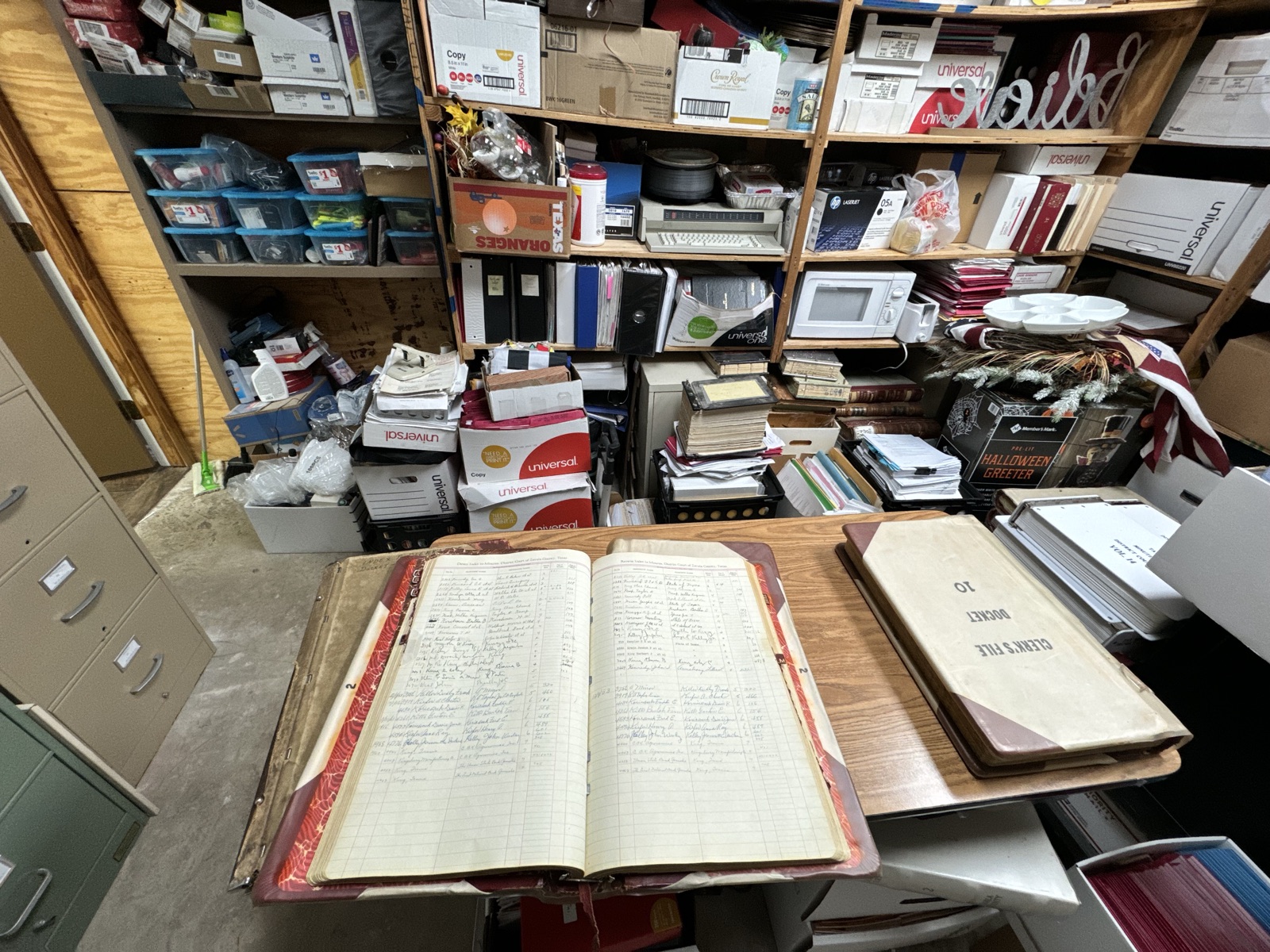
An instrument is any document filed of record that does something to the ownership of a piece of property. Somebody signed it, somebody filed it at a courthouse, and it is now part of the permanent record of that land whether anybody likes it or not.
The instruments are arranged in chronological order, either from most recent to oldest or the other way around. That order is the entire point. It is what lets someone see HOW the current owners came to own their interest in the tract, whether that is surface, minerals, or royalties.
What a gap looks like
Say the Johnson family gets the land by Warranty Deed in 1940, which means the seller warranted the title. Then there are no more records of the Johnson family in the title, and the Smith family shows up around 1970 without any clear instrument linking how they obtained the property from the Johnsons. That is a gap in title.
A landman can surmise that between 1940 and 1970 something happened that gave the Smith family ownership. But without any title filed of record, how do you prove it?
The most logical and easiest way to bridge a gap in title is by running the heirship of the Johnson family. Maybe they were not from the area where the property was located, and when they died the property was conveyed through their estate to the Smith family, but that probate would not be filed in the county where the property is located if no one thought to have it filed there.
If a landman can trace the Johnson heirship to a death in the family, they can often locate the place where Mr. or Mrs. Johnson died. Then the landman has to search the county records in THAT location, trying to find a link between the Johnson family and the Smith family. Most of the time this ends up requiring a phonecall to the probate department of that other county to obtain copies of Mr. or Mrs. Johnson’s probate. Hopefully that has the link to close the gap in title.
That is the job. Not reading deeds. Reading deeds is the easy part. The job is what you do about the thirty years where nobody bothered to write anything down.
During the Great Depression there were a lot of people who simply could not afford to pay taxes on property they owned, and it was later either sold by the Sheriff of the County or conveyed by assumption deed, which means that the buyer (grantee) was given the property under the condition that they would continue paying off the deed of trust owed by the previous owner. A whole decade of Texas title runs through that, and it is a reliable source of the kind of mess that shows up eighty years later as somebody’s title opinion requirement.
The Mineral Ownership Report
The MOR is the ownership math. The runsheet is the evidence behind it.
An MOR breaks down the gross acres of the tract and the decimal percent ownership each owner has in two separate things:
The minerals, which normally carry the executive right, the right to sign a lease. Bonus money goes to these people, and if you want to drill, these are the signatures you need.
The royalty, which is the right to get paid on production. Usually the mineral owner holds both. Not always.
Multiply the gross acres by the decimal and you get net mineral acres, which is the number that actually matters, because net mineral acres are what bonus and royalty get calculated on. A guy with a 1/16 interest in a 640 acre tract owns 40 net mineral acres, and every check he ever sees traces back to that number.
Now the part almost everybody gets wrong, including people in the business.
Minerals, executive rights, and royalty are terms that get used interchangeably every day, and half the time that is fine because the same person owns all three. The other half of the time it is flatly wrong, because those are separate rights and they can be split apart and sold to different people. Somebody can own minerals and have no say in whether the tract gets leased. Somebody can collect royalty and own no minerals at all. The words only line up when nobody has severed anything, and after a hundred years of Texas title, somebody usually has.
The two you will run into by name:
A Non Participating Royalty Interest, an NPRI, is royalty without minerals. An NPRI owner does NOT have to sign a lease and cannot stop you from drilling.
An NPRI gets created when somebody conveys a piece of the royalty they own. The instrument says something like “one half of all the proceeds from oil, gas and other minerals,” and all it is doing is stating how much of the grantor’s royalty is going out the door. It does not write a lease and it does not set lease terms. The royalty interest it came out of is now burdened by it. So if that royalty owner also holds the executive right and signs a lease, the NPRI riding on their interest is subject to the terms of that same lease. Somebody else negotiated it and the NPRI owner lives with it.
Where this gets ugly is the old ones. A lot of NPRIs written decades ago say something like “one half of the usual one eighth royalty,” back when one eighth was the only royalty anybody had ever seen. Now leases carry a quarter or better, and the fight is whether that owner gets a fixed one sixteenth forever or a floating one half of whatever royalty the lease actually provides. Millions of dollars turn on how a court reads a sentence somebody wrote in 1946, and the argument is still going.
Pooling is the other trap. An NPRI owner generally has to consent or ratify before their interest gets pooled into a unit, and skipping that step is how operators end up in court.
A Non Executive Mineral Interest, a NEMI, is the mirror image. You own the minerals, you get the bonus and the royalty, and you do not get to sign the lease. Somebody else holds the executive right and leases on your behalf. Less common than an NPRI and it confuses people twice as much when it shows up.
That whole tangle is the single most common thing mineral owners get wrong about their own property, and it is why they call a landman angry.
Show your work
Now something that genuinely irritates me.
Some land brokers deliver a Mineral Ownership Report with no limited title runsheet attached. Just the numbers. Here are your owners, here are their decimals, trust us.
How is anyone supposed to trust those numbers without seeing the work behind them? An MOR is a conclusion. The runsheet is the evidence for the conclusion. Handing over the conclusion alone is asking a client to spend lease bonus money on your word, and it means nobody downstream can check anything. The in house landman cannot spot the instrument you misread.
Our company MYR has always provided the limited title runsheet with our MORs, and I do not understand the shops that do not. Showing your work is not a premium feature. It is the difference between a report and an assertion.
Where a runsheet sits in the process
Here is the whole sequence, from somebody deciding they like a rock formation to somebody turning a well to sales.
- Geologists identify an area of interest.
- Engineers determine if it is economically viable.
- Landmen start a lease check to see what tracts inside the AOI are potentially open.
- Tracts that appear open get another sweep from the in house team, engineers, geos, and land, for viability.
- A landman prepares a Mineral Ownership Report, which SHOULD always include a limited title runsheet listing every document in the chain of title that affects ownership of minerals and royalties on the tract.
- The in house team looks at the MOR and gives the green light to lease the tract.
- The landman negotiates with the landowner and either gets the lease or does not (which means no step 8 in that instance).
- A landman prepares a full sovereignty runsheet, makes any updates or additions to the MOR, and sends that to the in house landman for review.
- An attorney writes the title opinion from the runsheet.
- Curative fixes whatever the opinion flags, mostly issues that would be a show stopper that could prevent drilling. Smaller curative items are often kicked down the road.
- Only then does anybody drill.
- Before Division Orders go out on a successful well, another curative sweep buttons up the remaining issues that could affect payment status for royalty owners.
Two things worth pulling out of that list.
Step 8 says sovereignty runsheet. Sovereignty means back to the original grant, the point where the land left government hands and became private property. A limited runsheet at step 5 goes back far enough to answer the leasing question, which is typically the date of the first mineral or royalty reservations in that county. Some counties that may be 1900, other counties it could be earlier. A sovereignty runsheet goes all the way to the beginning, because the attorney writing an opinion that a company is about to spend millions of dollars on is not interested in your judgment about where it was safe to stop.
Steps 10 and 12 are both curative, and that is not a typo. You cure once to drill and again to pay people. They are different lists.
Where the records live
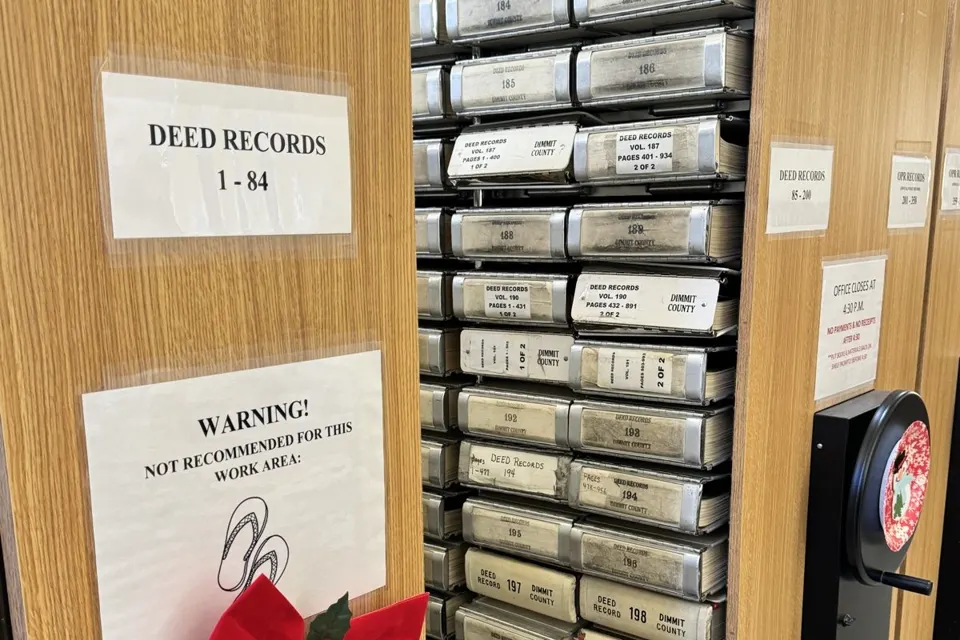
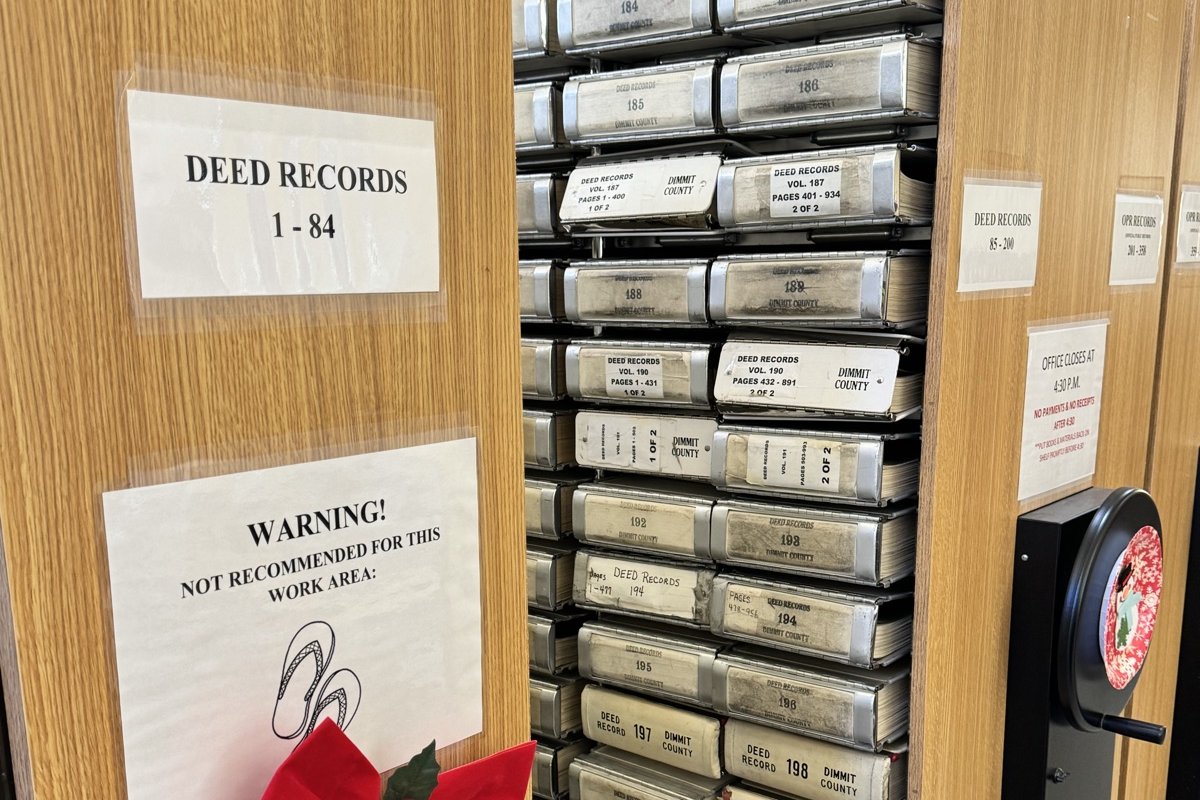
County Clerk records, at least in Texas, are the real property records. Deeds, mortgages, leases, easements, and everything else that touches the ownership of land. They are typically organized into the Deed Records, which is early title, with additional record books for Deeds of Trust, Cattle Brands, Plat Maps, and sometimes Oil and Gas Lease Records. More recently the Deed Records switch to Official Public Records, which was just a newer recording convention. Every county has slightly different record books and different date ranges between the book types.
The County Clerk also holds two things people expect to find somewhere else: probate, and vital records. In Texas, probate is a county court matter, so wills and estate administrations are filed with the County Clerk, though the bigger counties run a separate Probate Department inside that office. Bexar County has one. Plenty of small counties do not, and the county clerk handles it alongside everything else. Every county is a little different, and finding out how a particular one is organized is part of the job. Birth, death, and marriage records are County Clerk too. Since probate and heirship are how you close most gaps, that is where a lot of the work actually happens.
District Clerk records are the court records. Lawsuits, judgments, divorces, partitions, and settlements. Running the District Clerk records is necessary for most full title reports, because there could be a judgment, settlement, partition, or other court rendered ruling that changes the ownership of a tract of land but would not be recorded in the County Clerk’s office. A limited runsheet backing an MOR may or may not include a District Clerk search depending on what the client is paying for, and you should know which one you are getting before you rely on it.
It is still a physical job
Most oil and gas producing counties in Texas have had third party companies come through and image their records, to then be indexed and made available online. That covers the County Clerk side reasonably well in the counties anybody is drilling in.
The District Clerk side is uneven. Some counties have case search online, some have part of it, and some have nothing, and the older the record the worse your odds. Assume you are driving there until you confirm otherwise.
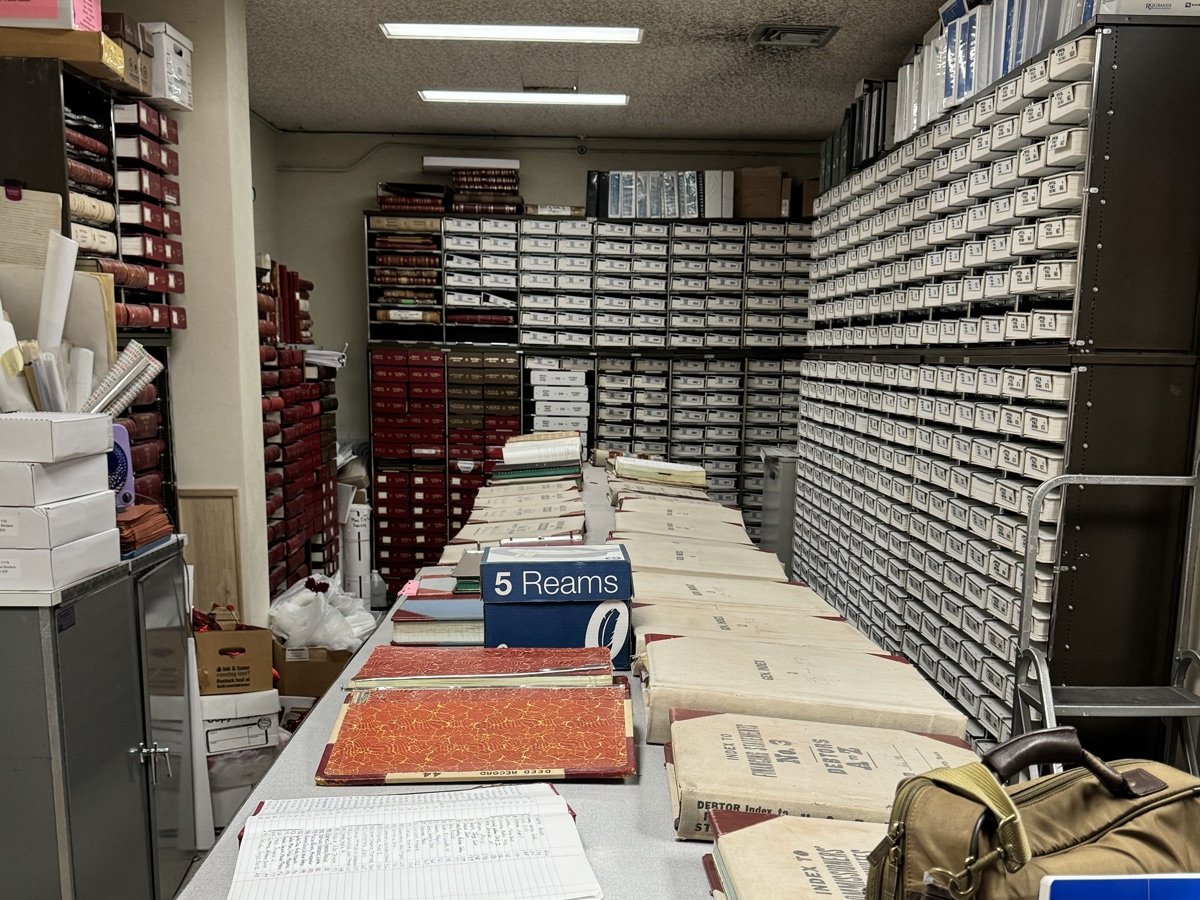
So no, this is not all digitized, and people are consistently surprised by that.
To be honest I’m not sure how to work as a part time landman, because you really need to be in the courthouse with the documents to do a runsheet, but part time was better than nothing.
The office geography I worked in years ago made the split literal. As you came to the top of the stairs, to your right was the runsheet/title side of the office, and to your left was the curative/leasing side.
Runsheet and title work is done in the courthouse and does not rely on contact with the landowners. Curative and leasing are the people people, the ones who deal directly with landowners. Both halves of that building were necessary and neither one wanted the other one’s job.
The abstract plant
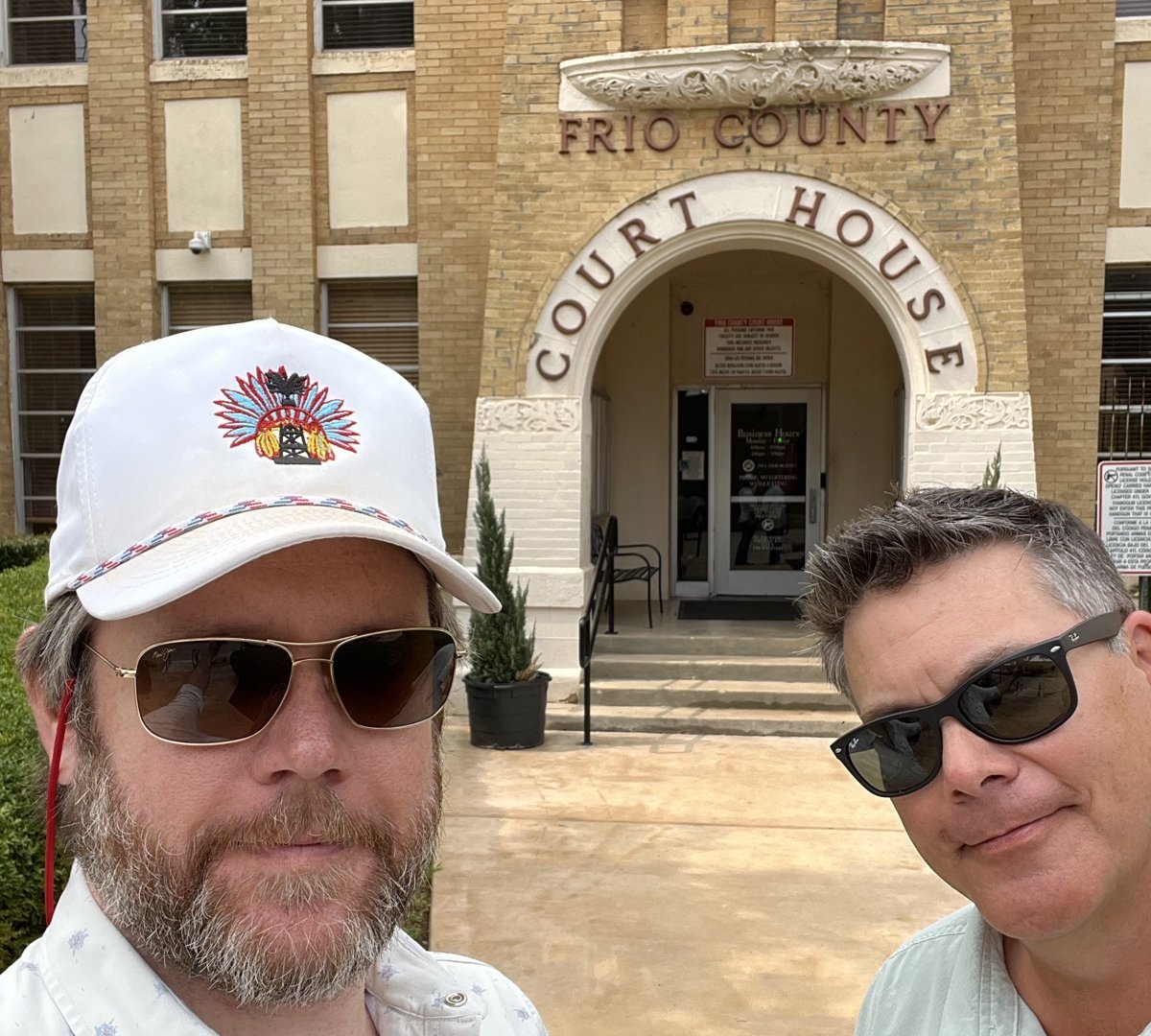
In order to get the title verified as quickly as possible I went to the abstract plant in town. The old man that runs their “oil and gas” records was extremely helpful. He has been working at the abstract plant since the 80s and told me he’s old enough to retire but doesn’t want to because that would mean he has to sit at home all day with his wife, bored. Talking to him for a half hour or so and I got the entire history of oil and gas in the county.
Abstract plants used to be everywhere. Filing cabinets full of index card holders, arranged by Abstract or Section number. You find the right cabinet, locate the index card holders that pertain to the Section or Abstract you need, and take notes on every index card in that chain of title. Standard formatting on the cards: Volume/Page, Instrument Type, Execution Date, File Date, Grantor and Grantee, and a brief property description.
You could pay by the hour, typically $60 to $100, and in one or two hours have the structure for a runsheet in your notes.
The catch is that those index cards do not have copies of the actual documents. They are the roadmap of what documents you need to go look at. Which is worth a lot, and is not the same thing as being done.
Big Title started buying abstract plants in the early Shale Boom days. They centralized the records, and for a time, allowed you to pull runsheets - they wouldn’t let you touch the cards because the cards had probably been incinerated - it was all on some MS DOS operating system on their Pentium II workstations at a secure facility located nowhere near the county you were actually working in. But I’ve heard that they aren’t allowing access to those records anymore. It’s extremely rare to hear about a still functioning abstract plant these days, and honestly, I’d like to buy a few rounds of beers for any of the owners that refused to sell out to Big Title.

How long does a runsheet take?
Not the answer anybody wants: a runsheet takes as long as it takes.
One could take 7 days to assemble, and the tract immediately adjacent to it could take 6 months. Each chain of title is completely independent of another. Most are easy enough. Some are absolute monsters.
The variables are not really about the tract. They are about the people who owned it. A tract that sold clean three times in a hundred years is a week. A tract where a family of nine inherited undivided interests in 1958, none of them probated anything, four of them moved out of state, two of them died in counties nobody in the family remembers, and one of them sold to a mineral buyer who then sold to three more mineral buyers, who each sold to 100 different doctors and lawyers, is a monster. Same acreage. Same county. Twenty times the work.
Anybody who quotes you a firm turnaround on a tract they have not looked at is guessing.
Curative
Curative, as it is commonly referred to, is the act of curing title defects. It is the cleanup crew for a hundred years of people being careless with paperwork.
The curative process typically starts with an attorney’s title opinion, which is generated from the runsheet and MOR, flagging items that need to be addressed. Those could be as simple as filing a certified copy of a probate in the county where the property is located, or as complicated as trying to get family members, or sometimes complete strangers, to sign a Stipulation of Interest and Cross Conveyance.
Quick pro tip: if you are a landman and you get assigned to have a Stipulation of Interest and Cross Conveyance prepared, assume nobody will ever agree to sign it. You still HAVE TO TRY, but it’s never going to happen.
Title defects are not always something that would prevent drilling. Many of them are cosmetic. Joe Bob Smith buys the property in 1990 and then J.B. Smith signs a lease in 1995, so you obtain an Affidavit of Identity stating that Joe Bob Smith and J.B. Smith are the same individual. Done. A lot of curative is filing an affidavit that corrects something that was wrong in a deed or lease at some point in the past: a spelling error, the wrong legal description, the wrong volume and page.
Sometimes a title defect IS severe enough to delay drilling. Most operators will put those issues off until they have picked up all the easy stuff around them, but it all depends on where the tract sits in the AOI. A monster in the middle of the unit gets solved. A monster on the edge gets designed around.
The affidavit of heirship
This is the workhorse of curative and the one term a mineral owner is most likely to search, so it gets its own explanation.
Somebody in the chain died. There was no probate, or the probate happened three states away and nobody filed it here. Their interest in the tract passed to their heirs by law the moment they died, but the record does not show it. As far as the courthouse knows, a dead person owns minerals.
An affidavit of heirship puts the family on record. It is a sworn statement, signed in front of a notary and filed in the county deed records, that lays out the family: who died, when they died, where they lived, whether they left a will, who they were married to, how many children they had, which ones are still living, and who inherited what.
The part people get wrong is who signs it. The best affidavit is signed by a disinterested witness, somebody old enough to have known the family and who does not stand to inherit anything. A neighbor. A family friend. The interested heirs can sign one too, but an affidavit where everybody who signed it stands to gain from what it says carries less weight, and a title attorney will tell you so.
Age helps. An affidavit that has been sitting in the deed records for decades, unchallenged by anybody, is worth more than one signed last Tuesday for the express purpose of getting a lease signed. Texas law puts a number on that: once one has been on record five years, a court has to accept it as evidence of what it says. That does not make it true and it does not make it binding, it just means the burden shifts to whoever wants to argue. Which is why filing them early matters, and why a landman who finds one already on record from 1994 has a good day.
An affidavit of heirship is not a probate. It does not bind anybody the way a court order does, and a determined heir can still come along later and fight it. It is the practical solution, not the perfect one, and the entire industry runs on it.
The handoff problem
None of the above is the slowest part. This is:
I’ve sent USB drives with digital copies of all the instruments included with a run sheet (that has all the hard copies of course) to attorneys that don’t know what a USB drive is. One of them asked me “how do I put that in my iPad?” I honestly don’t know whether he was joking or not.
You can rebuild a chain of title back to a Spanish land grant, find a probate in a county nobody thought to look in, and close a gap that sat open for thirty years. Then it sits in somebody’s inbox.
And the clock is always running while it sits. I asked a boss once how long I had to get the Patricks runsheet done:
Well considering their last well took over 5 weeks to get drilled, I’d like for you to get that runsheet done in about 2 weeks and to the attorney so he can hopefully crank out a title opinion…
That is the actual pace of this. Two weeks to reconstruct a century of ownership, and then you wait.